
Puglia first route: Bari base or slow move south?
Move south slowly rather than using Bari for the whole trip. For most first visits, two or three bases work best: Bari at the start, a central base around the coast or Valle d’Itria, then Lecce for the Salento end. You will spend less time retracing your route without turning every attractive town into another check-in.
Full answer
The better first route is a slow move south, using two or three bases rather than sleeping in every town. Bari is practical for arriving and exploring the northern part of the region, but keeping it as your only base can mean repeated journeys over the same ground once you want to reach the Valle d’Itria, Lecce and the Salento.
Aim for a route that changes character without changing beds every night: start in Bari, add one central base if time allows, and finish in Lecce. That keeps transport manageable while still making the trip feel like a journey rather than a collection of day trips.
When Bari works as a base
Bari makes sense for the opening part of the trip. Give the city proper time rather than treating it only as a transport junction, then use it for selected outings in the surrounding area. It is a particularly sensible choice if the trip is short, you are travelling without a car or you dislike moving accommodation.
A single Bari base becomes less convincing as the itinerary reaches farther south. Long out-and-back days can flatten the differences between places, and dinner often gets cut short because you need to return to Bari. If your list includes several destinations south of the Valle d’Itria, move on instead of forcing them all into day trips.
A practical two- or three-base route
With roughly a week, split the stay between Bari and Lecce. Stop at one or two places between them while travelling south, rather than automatically giving each town an overnight. This is the cleanest pattern for travellers relying mainly on trains, although stations are not always beside the historic centre and some smaller-town connections may require more planning.
With more time, use three bases: Bari, a central base around Monopoli, Ostuni or the Valle d’Itria, and Lecce. Choose the middle stop according to your priorities. Monopoli suits travellers who want a coastal base with onward rail options; Ostuni or a smaller inland town puts the whitewashed hill-town landscape closer, but may be less straightforward without a car.
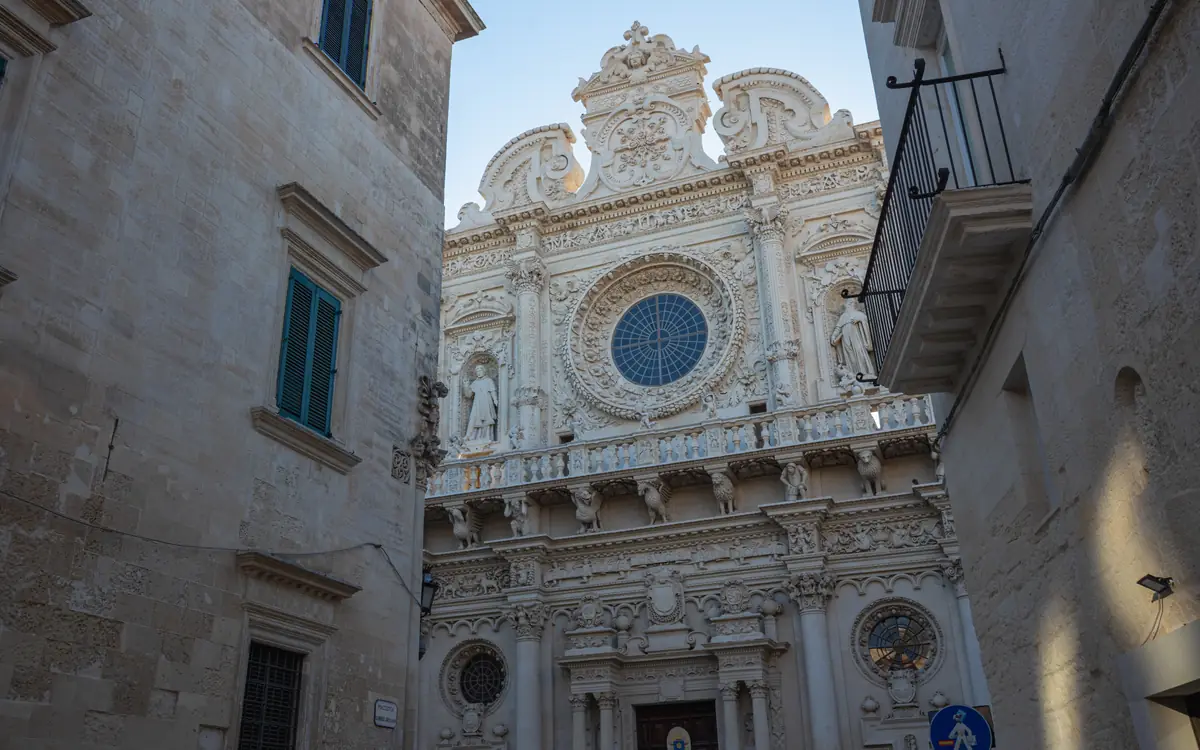
Lecce is the logical final base for exploring the city and making selected trips into the Salento. It also prevents a southern day from ending with a long return north. Do not try to cover both coasts and every small town simply because they fit on a map. Pick a few places that offer something distinct.
Car or public transport?
Public transport can support the broad Bari-to-Lecce route, especially when bases are chosen around the main rail corridor. A car adds flexibility for inland villages, rural stays and scattered stops in the Valle d’Itria, but it also brings parking decisions and restricted-traffic zones in historic centres. One sensible compromise is to travel between the larger cities by rail and hire a car only for the middle section if your plans genuinely need it.
Keep luggage light enough to manage station transfers and uneven old-town streets. Two well-chosen day trips from each base usually produce a better trip than changing hotels for every name on the wish list.
Check current details
Before fixing the route, check current train and bus timetables, seasonal service levels, attraction opening hours, and any parking or restricted-traffic rules. Connections that look simple on a map may work differently on your exact travel dates.