
How should a first-time traveller plan Australia without overpacking it?
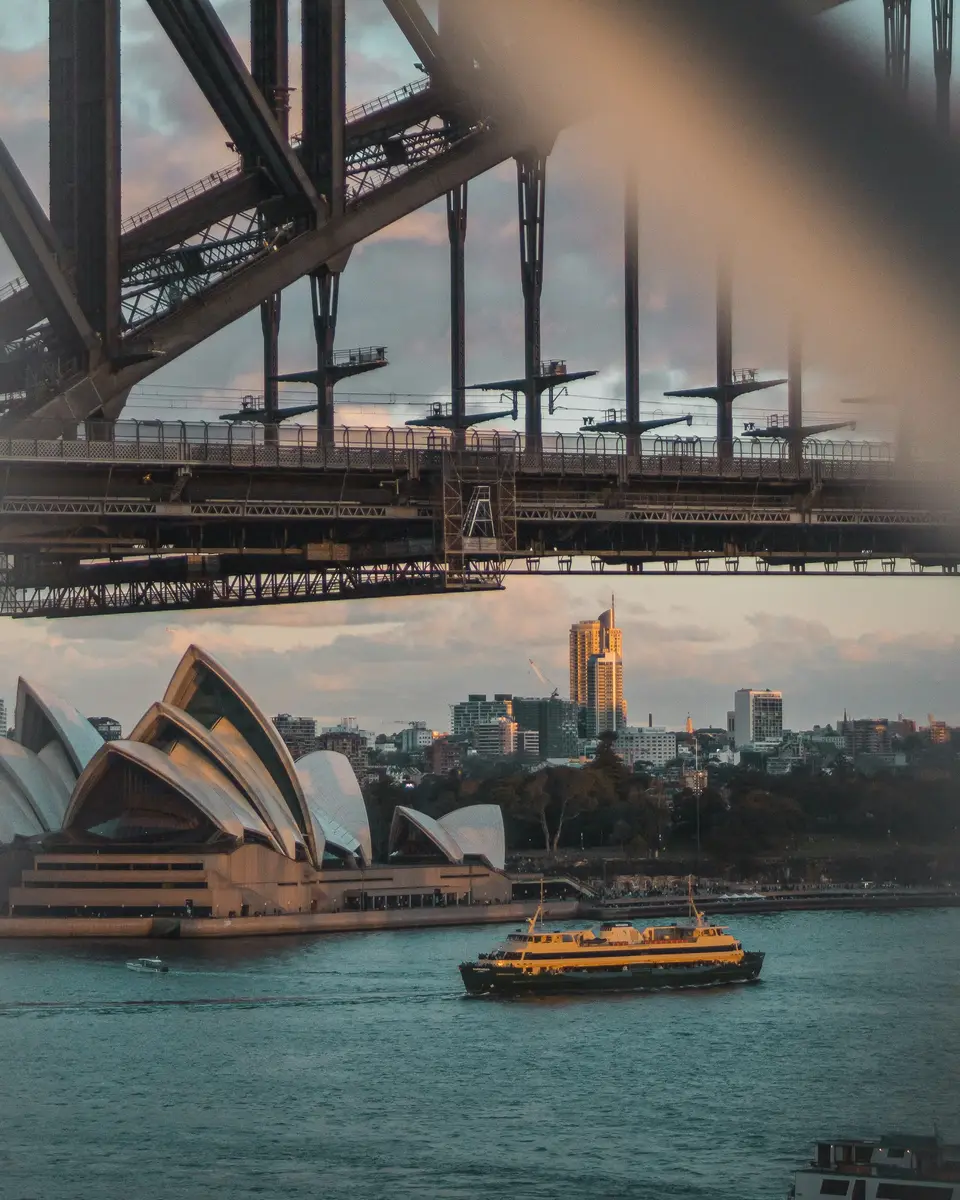
Choose two main regions. Sydney and Melbourne make the easiest city trip. Sydney and Queensland combine city and reef or beach. Melbourne and Tasmania suit food, coast and driving. Sydney or Melbourne with the Red Centre creates a city-and-desert trip. Add a third region only with at least two weeks and a comfortable pace.
Full answer
Australia is much larger than most first itineraries allow for.
The distances are not only between Sydney and Perth. Queensland itself stretches across tropical coast, islands, reef, rainforest and large inland areas. Tasmania deserves more than a weekend. The Red Centre is a flight away from the east-coast cities and then still requires time on the ground.
Choose two regions and let them be different.
Sydney and Melbourne
This is the simplest first route.
Sydney is the more immediately dramatic city. Ferries cross the harbour, coastal walks pass coves and ocean pools, and the Opera House and bridge remain part of ordinary views rather than one sightseeing stop.
Melbourne is flatter and less obviously beautiful, but it rewards time through food, neighbourhoods, galleries and live music. The city also makes a natural starting point for the Great Ocean Road.
Spend four or five nights in Sydney and three or four in Melbourne. Fly between them unless you genuinely want a longer coastal road trip.
Sydney and Queensland
Choose this for city time followed by reef, rainforest or beach.
The important decision is which part of Queensland.
Cairns and Port Douglas suit travellers who want the Great Barrier Reef and the Daintree. Port Douglas is smaller and more relaxed; Cairns has easier transport and a wider choice of tours.
The Whitsundays suit travellers who want sailing, islands and Whitehaven Beach. Airlie Beach is the practical base, while island resorts create a more contained holiday.
Brisbane and the Gold or Sunshine Coast are easier to reach but provide a different trip. They suit beaches, family attractions and city time more than a first reef journey.
Do not try to combine Cairns, the Whitsundays and Brisbane in one short Queensland section.
Melbourne and Tasmania
This pairing works well for food, coast, wildlife and driving.
Melbourne provides the city stay. Tasmania adds cool air, forests, small towns and roads where the drive is part of the day. Hobart and the Tasman Peninsula can fill several days; Freycinet and the east coast need more time; Cradle Mountain and the west are farther apart than they appear.
Give Tasmania at least five nights. A week or more is much better.
A city and the Red Centre
Choose Sydney or Melbourne, then fly to Uluru or Alice Springs.
The Red Centre is worth the journey when desert landscapes are a main reason for visiting Australia. The air is dry, the horizon feels enormous and Uluru changes colour as the sun moves. Stay long enough for an early walk, sunset and at least one quieter part of the day.
Two or three nights around Uluru is the minimum. A wider journey through Kings Canyon and Alice Springs needs more time and a car or tour.
Western Australia
Perth and the south-west can form a complete trip without the east coast.
Perth, Rottnest Island, Fremantle and Margaret River work well together. Ningaloo, the Kimberley and the far north require separate flights, long drives and careful seasonal planning.
Do not add Perth to a Sydney–Melbourne trip simply to say you crossed the country.
A good first trip by length
One week
Choose one city and one nearby region, or Sydney and Melbourne.
Two weeks
Choose two main regions and, at most, one extra place with easy flights.
Three weeks
Add a third region or build a proper road trip through one part of the country.
Australia will not fit into one holiday. The goal is to remember the places, not the airports between them.